

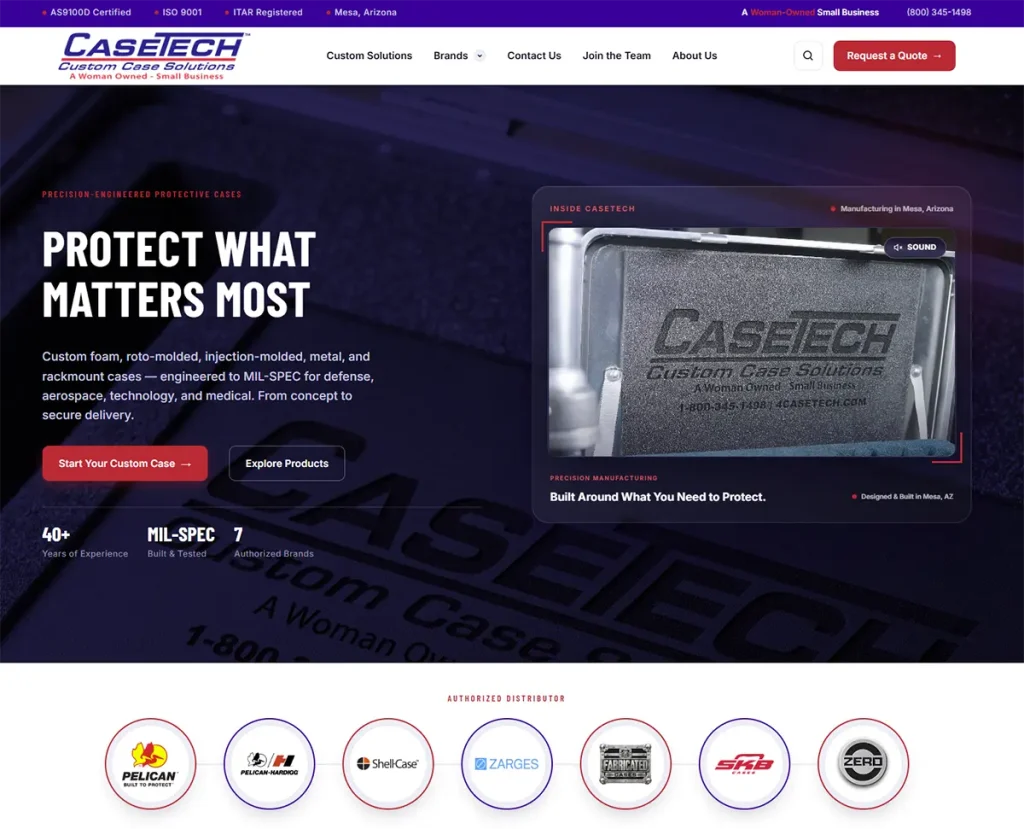
I don’t usually post about client projects. Our clients’ business is their business. But our recent rebuild of 4CaseTech.com is a good example of what happens when you rethink a website instead of adding to it, so I wanted to share it.
Where they started
CaseTech’s old site was a WooCommerce store with about 800 products and more than 20 plugins. Each plugin had been added to solve a small problem, but together they meant constant updates, occasional conflicts, and a lot of code loading on every page.
The site needed an overhaul anyway. What really drove the project was a change in how CaseTech wanted to handle business online.
What they needed
CaseTech decided they didn’t need a shopping cart. They wanted to work from custom forms that they could build themselves and place wherever they needed them on the site, so they could collect exactly the information required to quote a customer. There wasn’t a plugin that did that the way they wanted, so we built one.
Working with the owner
We worked directly with CaseTech’s owner throughout the project. We started by learning how the business runs: how customers find them, what information they need to put together a quote, and where the old site was getting in the way. Then we built in stages and reviewed each piece with him as it came together. He told us what worked and what didn’t, and we adjusted until it matched how he actually does business.
What we built
We moved all 800 products out of WooCommerce into a lightweight product system we built from scratch, so none of the existing product content was lost.
The site went from more than 20 plugins to three:
- A custom product plugin that manages and displays the full catalog
- A custom menu plugin that handles navigation across the catalog
- One established plugin for reliable form delivery, so inquiries make it to the inbox
We also built ad tracking into the system, with a dashboard report that shows which ads and campaigns are bringing in inquiries, without a third-party analytics plugin.
The results
- Less maintenance: three plugins instead of 20+ means fewer updates, fewer conflicts, and less exposure to security issues.
- A faster site: no cart or checkout scripts loading on every page.
- Code they own: no third-party license renewals, and no waiting on another developer for bug fixes.
- Easy to extend: if CaseTech wants online checkout back later, we can add it to the existing system.
- Measurable ad spend: they can see which ads produce leads and adjust their budget accordingly.
A lot of WordPress sites pick up plugins over the years until the site is harder to maintain than it should be. If that sounds like yours, we’d be glad to take a look. We’ve been building websites since 1999.